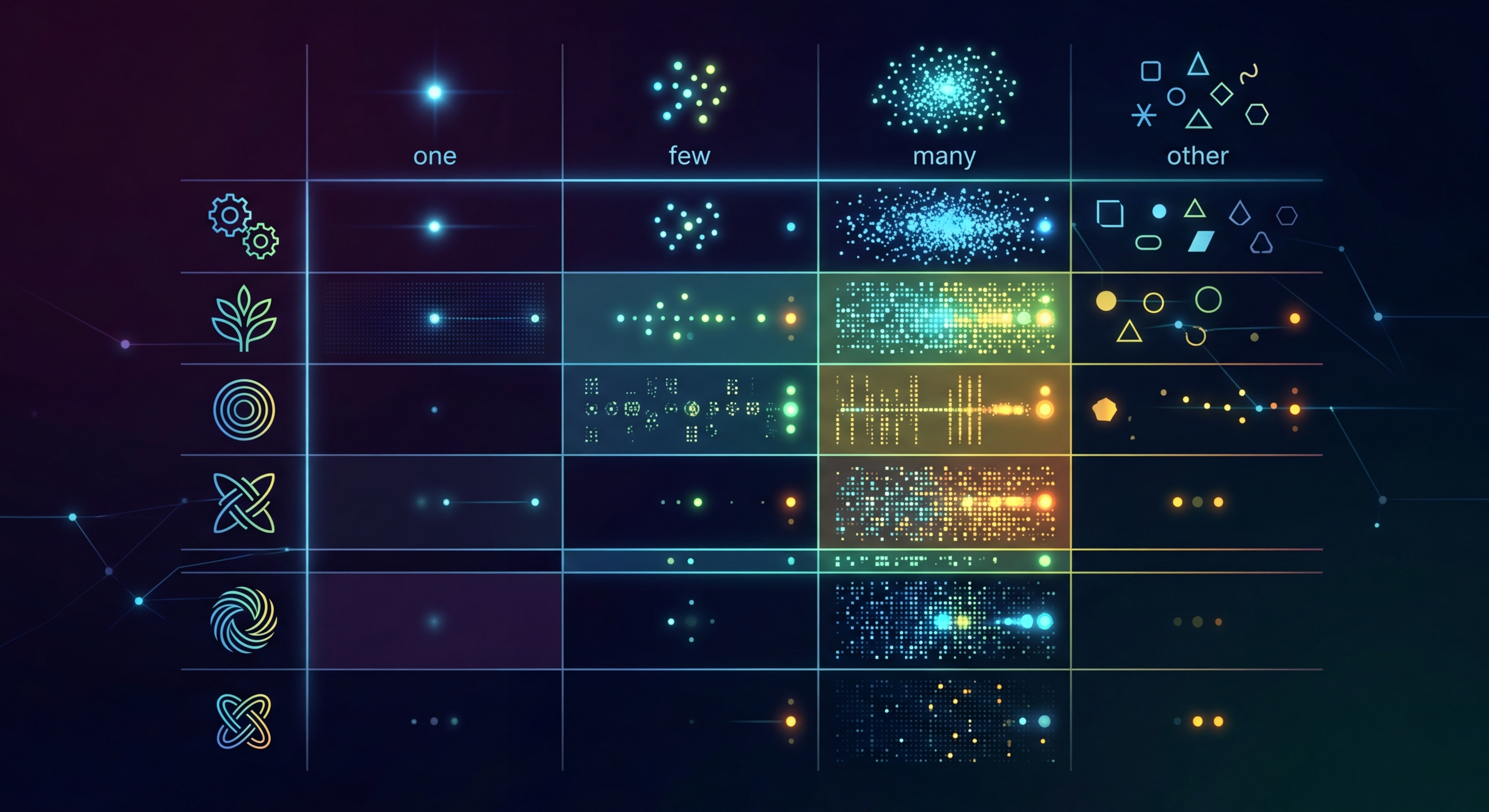
Pravidlá množného čísla CLDR: overujte kategórie i18n naprieč jazykmi
Angličtina má 2 tvary množného čísla. Arabčina ich má 6 a ruština 4. Ak Vaše nastavenie i18n spracúva iba 'one' a 'other', vo väčšine jazykov je aplikácia chybná. Táto príručka vysvetľuje pravidlá množného čísla CLDR a spôsob ich overovania.
Čo sú pravidlá množného čísla CLDR?
Unicode CLDR (Common Locale Data Repository) definuje šesť kategórií množného čísla: zero, one, two, few, many a other. Každý jazyk používa podmnožinu týchto kategórií s konkrétnymi číselnými pravidlami. Angličtina používa one (presne 1) a other (všetko ostatné). Väčšina jazykov je však zložitejšia a nesprávne tvary množného čísla vedú ku gramaticky chybnému textu, ktorý pôsobí amatérsky.
// English has 2 plural forms: one, other
// "1 item" vs "2 items"

// But many languages have more:
// Arabic: 6 forms (zero, one, two, few, many, other)
// Polish: 3 forms (one, few, other)
// Japanese: 1 form (other)
// Czech: 3 forms (one, few, other)

// If you only provide "one" and "other",
// Arabic and Polish users see broken text.Šesť kategórií množného čísla
CLDR definuje presne šesť kategórií množného čísla. Nie každý jazyk používa všetkých šesť – angličtina používa iba dve, arabčina všetky. Vaše súbory i18n musia definovať kategórie požadované jednotlivými cieľovými jazykmi, inak používatelia uvidia pády, nespracované kľúče alebo gramaticky nesprávny text.
// CLDR defines 6 plural categories:
// zero  - 0 items (Arabic, Latvian)
// one   - 1 item (most languages)
// two   - 2 items (Arabic, Welsh)
// few   - 2-4 items (Polish, Czech, Russian)
// many  - 5-19 items (Arabic, Polish, Russian)
// other - everything else (required for ALL languages)

// Examples by language:
// English:  one, other                    (2 forms)
// French:   one, many, other              (3 forms)
// Arabic:   zero, one, two, few, many, other  (6 forms)
// Japanese: other                         (1 form)
// Polish:   one, few, many, other         (4 forms)
// Russian: one, few, many, other (4 forms)Kategórie množného čísla podľa jazyka
Rýchly prehľad kategórií množného čísla požadovaných bežnými cieľovými jazykmi. Použite ho pri definovaní tvarov množného čísla v prekladových súboroch.
// MISTAKE 1: Only providing "one" and "other"
// en.json
{
  "items_one": "{{count}} item",
  "items_other": "{{count}} items"
}
// This breaks for Arabic (missing zero, two, few, many)

// MISTAKE 2: Hardcoded plural logic
// WRONG:
const text = count === 1 ? "1 item" : `${count} items`
// This fails for languages where "1" isn't the only "one" form

// MISTAKE 3: Missing "other" category
// "other" is REQUIRED for every language
// Without it, some numbers show raw keys

// MISTAKE 4: Translating plural RULES instead of text
// The CLDR rules (one, few, many) are universal
// Only the TEXT after each rule should be translatedAutomatizované overovanie množného čísla
i18n-validate kontroluje, či každý kľúč množného čísla vo Vašich prekladových súboroch definuje všetky kategórie CLDR požadované cieľovým jazykom. Ak má ruský súbor iba tvary 'one' a 'other', nástroj označí chýbajúce kategórie 'few' a 'many' ako chyby. Spúšťajte ho v CI a odhaľte problémy skôr, než sa dostanú k používateľom.
# Validate plural forms match CLDR requirements
npx i18n-validate --check-plurals \
  --source locales/en.json \
  --targets 'locales/*.json'

# Output:
# locales/ar.json:
#   items: missing plural forms: zero, two, few, many
#   Expected: zero, one, two, few, many, other
#   Found: one, other
#
# locales/pl.json:
#   items: missing plural forms: few, many
#   Expected: one, few, many, other
#   Found: one, other

# Fix: Add all required forms for each language
# See https://unicode.org/cldr/charts/latest/supplemental/language_plural_rules.htmlICU MessageFormat pre tvary množného čísla
Odporúčaným spôsobom definovania prekladov množného čísla je ICU MessageFormat. Používa jediný reťazec so zabudovanými pravidlami množného čísla: {count, plural, one {# item} other {# items}'}. ICU podporujú react-intl, vue-i18n, Angular Transloco, Flutter a väčšina moderných frameworkov i18n.
// ICU MessageFormat handles plurals correctly
// It uses CLDR rules internally

// en.json
{
  "items": "{count, plural, one {# item} other {# items}}"
}

// ar.json
{
  "items": "{count, plural, zero {لا عناصر} one {عنصر واحد} two {عنصران} few {# عناصر} many {# عنصرًا} other {# عنصر}}"
}

// pl.json
{
  "items": "{count, plural, one {# element} few {# elementy} many {# elementów} other {# elementu}}"
}

// ICU also handles ordinals:
{
  "ranking": "{pos, selectordinal, one {#st} two {#nd} few {#rd} other {#th}}"
}# Validate ICU message syntax
npx i18n-validate --check-icu \
--source locales/en.json \
--targets 'locales/*.json'
# Catches:
# - Missing plural categories for the target language
# - Syntax errors in ICU messages
# - Mismatched variable names
# - Missing "other" (always required)Vyskúšajte i18n Agent teraz
Potiahnite súbor na preklad sem
JSON, YAML, PO, XML, CSV, Markdown, Properties
alebo kliknite a vyberte súbor
Cieľové jazyky