Teksta paplašināšana i18n: novērsiet izkārtojuma bojājumus tulkojumu garuma dēļ
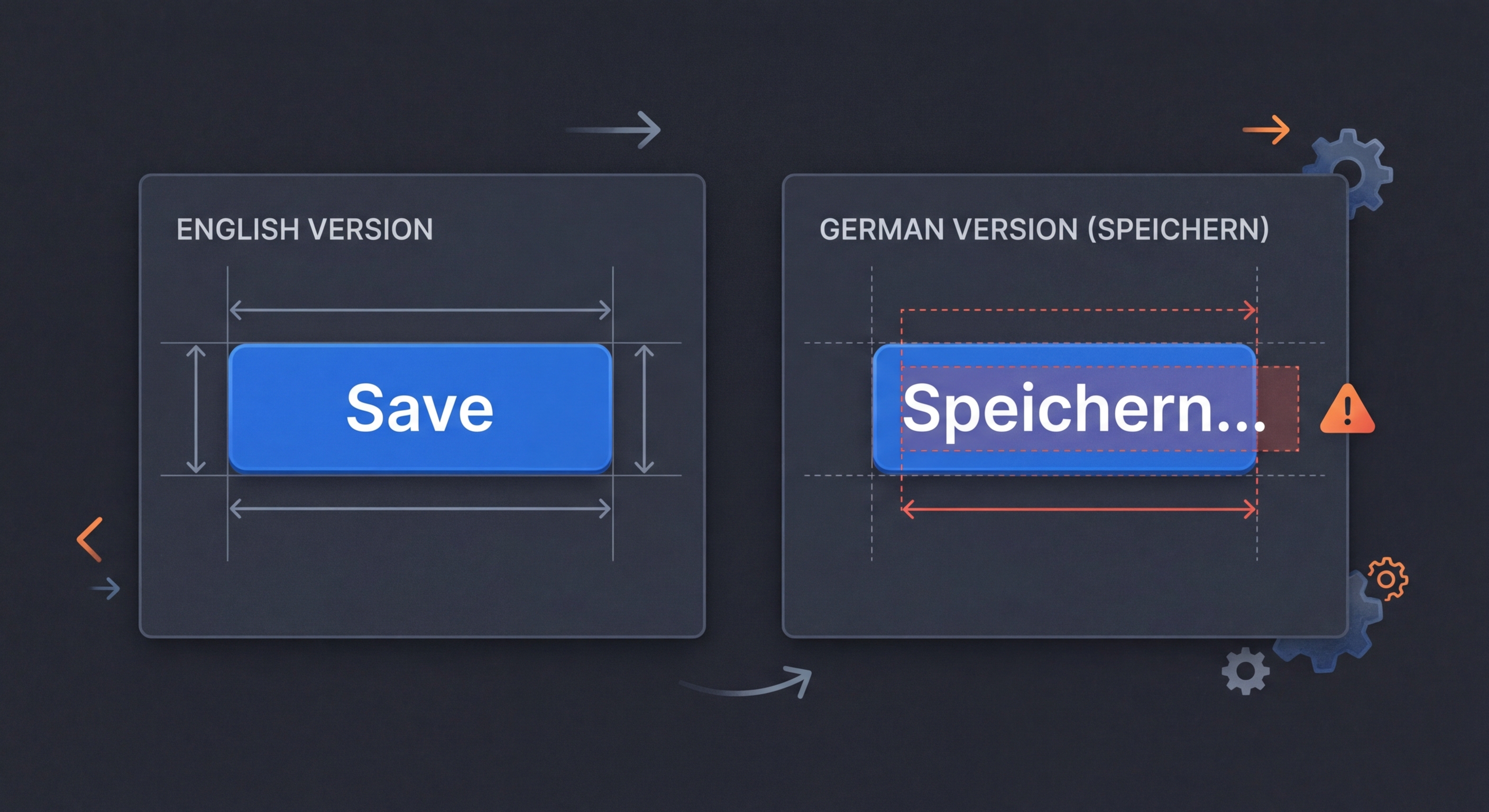
Jūsu angļu UI ietilpst perfekti. Tad ierodas vācu tulkojumi — par 30 % garāki. Somu tulkojumi ir par 40 % garāki. Pogas pārplūst, tabulas sabrūk un rūpīgi izstrādātais izkārtojums izjūk. Teksta paplašināšanas testēšana to novērš.
Kāpēc teksta paplašināšanās bojā izkārtojumus
Izstrādātāji veido UI ar angļu tekstu, kas ir viena no kompaktākajām valodām. Kad ierodas tulkojumi, garākas valodas pārpilda konteinerus, salauž režģa izkārtojumus, apcērp pogu etiķetes un izstumj saturu ārpus ekrāna. Šīs kļūdas parādās tikai konkrētās lokālēs, tāpēc izstrādē un testēšanā tikai angļu valodā tās nav redzamas.
// English is one of the most compact languages.
// Translations are almost always LONGER.

// English (source):
"Save"           // 4 chars

// Translations:
"Speichern"      // German: 10 chars (+150%)
"Enregistrer"    // French: 12 chars (+200%)
"Guardar"        // Spanish: 7 chars (+75%)
"Сохранить"      // Russian: 9 chars (+125%)
"Tallenna"       // Finnish: 8 chars (+100%)

// Buttons, labels, and table headers designed for
// English text WILL break in other languages.
Teksta paplašinājuma attiecības pēc valodas
Vidējās paplašinājuma attiecības pret angļu avota tekstu. Īsas virknes (mazāk par 20 rakstzīmēm) paplašinās vairāk nekā garas virknes, jo atsevišķu vārdu izvēlei ir lielāka ietekme uz kopējo garumu.
// Average text expansion relative to English:

// European languages:
// German:     +30-35%  (compound words)
// Finnish:    +30-40%  (agglutinative)
// French:     +15-25%  (articles, prepositions)
// Spanish:    +15-25%
// Italian:    +15-25%
// Portuguese: +15-25%
// Russian:    +20-30%  (case endings)
// Polish:     +20-30%
// Greek:      +20-30%

// Asian languages (CJK):
// Chinese:    -30-50%  (shorter in characters, but wider per char)
// Japanese:   -20-40%  (kanji compress meaning)
// Korean:     -10-20%

// Right-to-left:
// Arabic:     +20-30%
// Hebrew:     +10-20%

// Rule of thumb by source string length:
// 1-10 chars:   expect +200% expansion
// 11-20 chars:  expect +80% expansion
// 21-70 chars:  expect +40% expansion
// 71+ chars: expect +30% expansionTestēšana ar i18n-pseudo
i18n-pseudo paplašināšanas stratēģija avota virknēm pievieno pildījumu, lai imitētu tulkojuma garumu. Iestatiet mērķvalodām atbilstošu paplašinājuma attiecību un testējiet izkārtojumus pirms īstu tulkojumu saņemšanas.
# Method 1: Pseudo-localization with expansion
npx i18n-pseudo generate \
  --source locales/en.json \
  --output locales/pseudo-expanded.json \
  --expansion 1.4 \
  --preset expanded

# Method 2: Longest-translation analysis
npx i18n-validate expansion \
  --source locales/en.json \
  --targets 'locales/*.json' \
  --report expansion-report.json

# Output:
# Key                  | EN  | Longest | Lang | Ratio
# ---------------------|-----|---------|------|-------
# nav.settings         | 8   | 14      | de   | 175%
# buttons.save         | 4   | 12      | fr   | 300%
# errors.networkFailed | 14  | 28      | fi   | 200%

# Method 3: Visual regression with expanded text
npx playwright test \
  --project=expansion-test \
--update-snapshots// playwright.config.ts
export default defineConfig({
projects: [
{
name: 'expansion-test',
use: {
locale: 'pseudo-expanded',
},
},
],
});
// tests/expansion.spec.ts
test('buttons do not overflow with expanded text', async ({ page }) => {
await page.goto('/');
// Check no horizontal overflow
const buttons = await page.locator('button').all();
for (const button of buttons) {
const box = await button.boundingBox();
const parent = await button.locator('..').boundingBox();
expect(box!.x + box!.width).toBeLessThanOrEqual(
parent!.x + parent!.width
);
}
// Visual snapshot comparison
await expect(page).toHaveScreenshot('homepage-expanded.png', {
maxDiffPixels: 100,
});
});i18n dizaina paraugprakse
Lai veidotu izkārtojumus, kas spēj apstrādāt teksta paplašināšanos, dizaina lēmumi jāpieņem pirms tulkošanas darba sākuma. Šī prakse novērš biežākās ar paplašināšanos saistītās kļūdas.
/* 1. Use flexible containers, not fixed widths */
/* WRONG */
.button { width: 120px; }

/* RIGHT */
.button { min-width: 80px; padding: 8px 16px; }

/* 2. Allow text wrapping in labels */
/* WRONG */
.label { white-space: nowrap; overflow: hidden; }

/* RIGHT */
.label { overflow-wrap: break-word; }

/* 3. Use CSS Grid/Flexbox for adaptive layouts */
.nav {
  display: flex;
  flex-wrap: wrap;
  gap: 8px;
}

/* 4. Reserve space for the longest expected translation */
/* Use min-width based on ~1.4x English length */
.table-header {
  min-width: max-content;
  padding-right: 16px;
}

/* 5. Test with the longest language first */
/* German and Finnish are good stress-test languages */

/* 6. For CJK: account for wider characters */
/* CJK characters are typically 2x the width of Latin chars */
/* Even though text is shorter, it may be wider visually */Izmēģiniet i18n Agent tūlīt
Nometiet tulkošanas failu šeit
JSON, YAML, PO, XML, CSV, Markdown, Properties
vai noklikšķiniet, lai izvēlētos
Mērķa valodas